Food loss and waste have far-reaching consequences, particularly for the environment.
Food waste contributes to substantial greenhouse gas emissions, both during production and once it ends up in landfills. When food decomposes anaerobically (without oxygen) in landfills, it releases harmful methane, a potent greenhouse gas.
The FAO (2015) and WWF (2017) report that food waste accounts for around 8% to 10% of global greenhouse gas emissions. In South Africa, this adds significantly to the country’s carbon footprint and has implications for the country’s carbon disclosures. South Africa is also a water-scarce country, yet large amounts of water are used to produce food that is ultimately wasted.
The CSIR (2021) estimates that the water footprint of wasted food in South Africa amounts to billions of litres annually. This wastage is equivalent to the domestic water use of millions of people each year.
Likewise, significant amounts of energy are used in food production, from planting and harvesting to processing, packaging, and transportation (CSIR 2021). Wasting food means all the energy used in these stages is effectively wasted. Food production occupies vast amounts of agricultural land. When food is wasted, the land, soil nutrients, and associated resources used to grow it are also squandered. This wasted land could have been used for conservation efforts or natural habitats, meaning that food waste indirectly contributes to biodiversity loss.
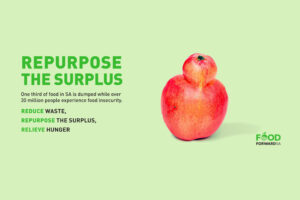
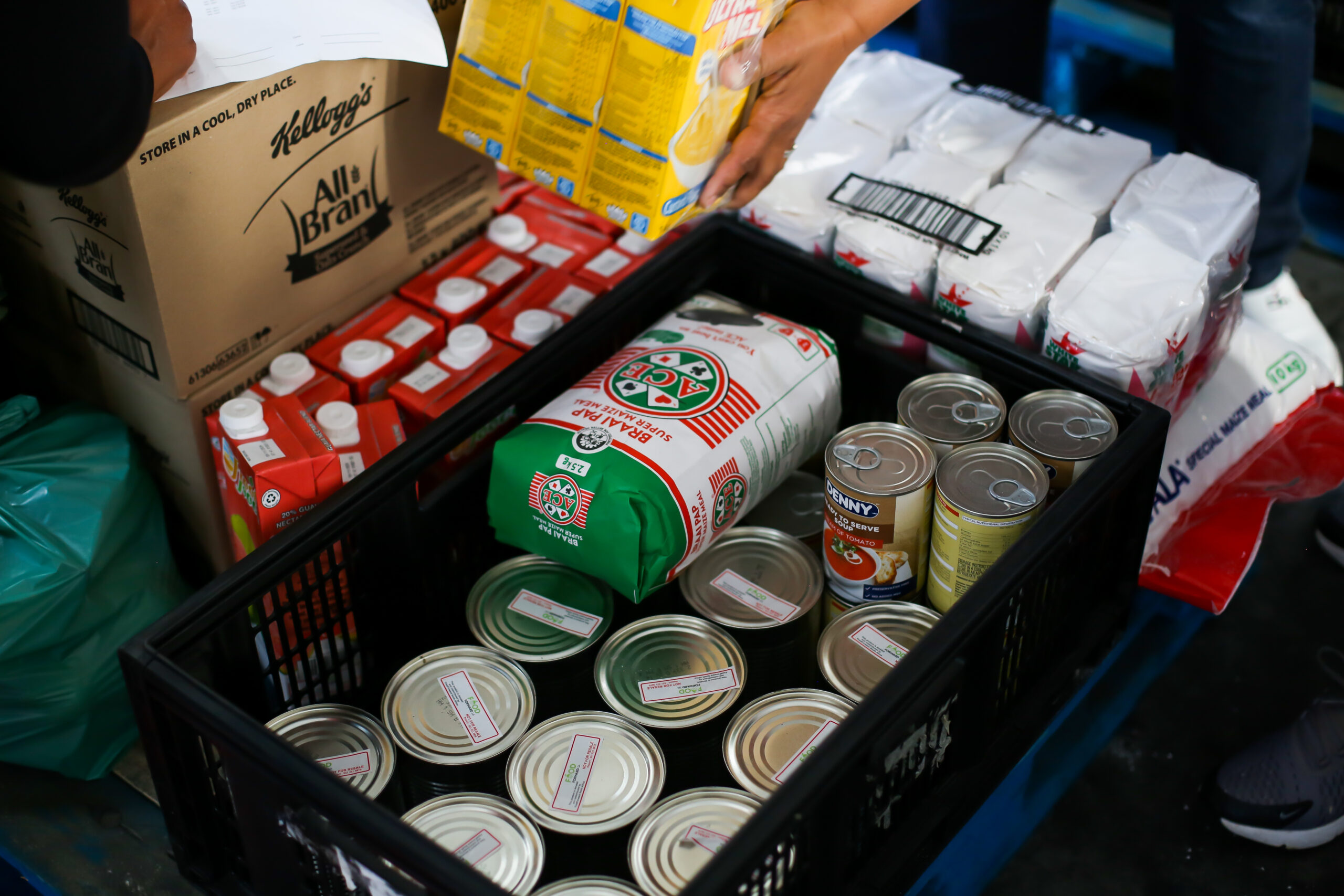
Hence, reducing and mitigating food loss and waste will be catalytic in alleviating and mitigating some of these environmental pressures. The CSIR (2021) and WWF (2024) both advocate for measures such as improving regenerative agricultural practices and enhanced food distribution, like diverting viable food that would normally be lost to food donation schemes like FoodForward SA to help mitigate these environmental impacts.
FoodForward SA is advocating for a South African Food Donation policy and is part of a SABS Working Group to develop a South African National Standard for Food Donations, in collaboration with the Consumers Goods Council of SA, Harvard Law School Food Law and Policy Clinic, and food supply chain industry partners.
These guidelines will enable the supply chain, specifically the manufacturing sector, to donate their surplus food without risking their business or the health of the consumer, in addition to this, FFSA will continue with the future development of the FoodShare digital platform. These actions will reduce food waste dramatically, particularly in the hospitality, manufacturing and agricultural sectors, with a focus on overproduction and out-of-spec products, all of which are still fit for human consumption.