FoodForward SA is pleased to welcome the Public Investment Corporation (PIC) as a new partner supporting the expansion of our Food Gardens Connect programme in the Western Cape.
Through PIC’s support, the programme is expanding to 10 community food gardens across Nyanga, Khayelitsha, Fish Hoek – Masiphumelele and Gugulethu, helping to strengthen local food systems, improve food security, and build more resilient communities.
Food Gardens Connect begins with a seed, but its impact extends far beyond the harvest. Through six weeks of practical training, unemployed community members gain the knowledge, equipment, seedlings, and ongoing mentorship needed to grow their own food.
The programme also includes a guaranteed buy-back of harvested produce, creating sustainable income opportunities while supplying fresh, nutritious vegetables for redistribution through FoodForward SA’s network of Beneficiary Organisations.
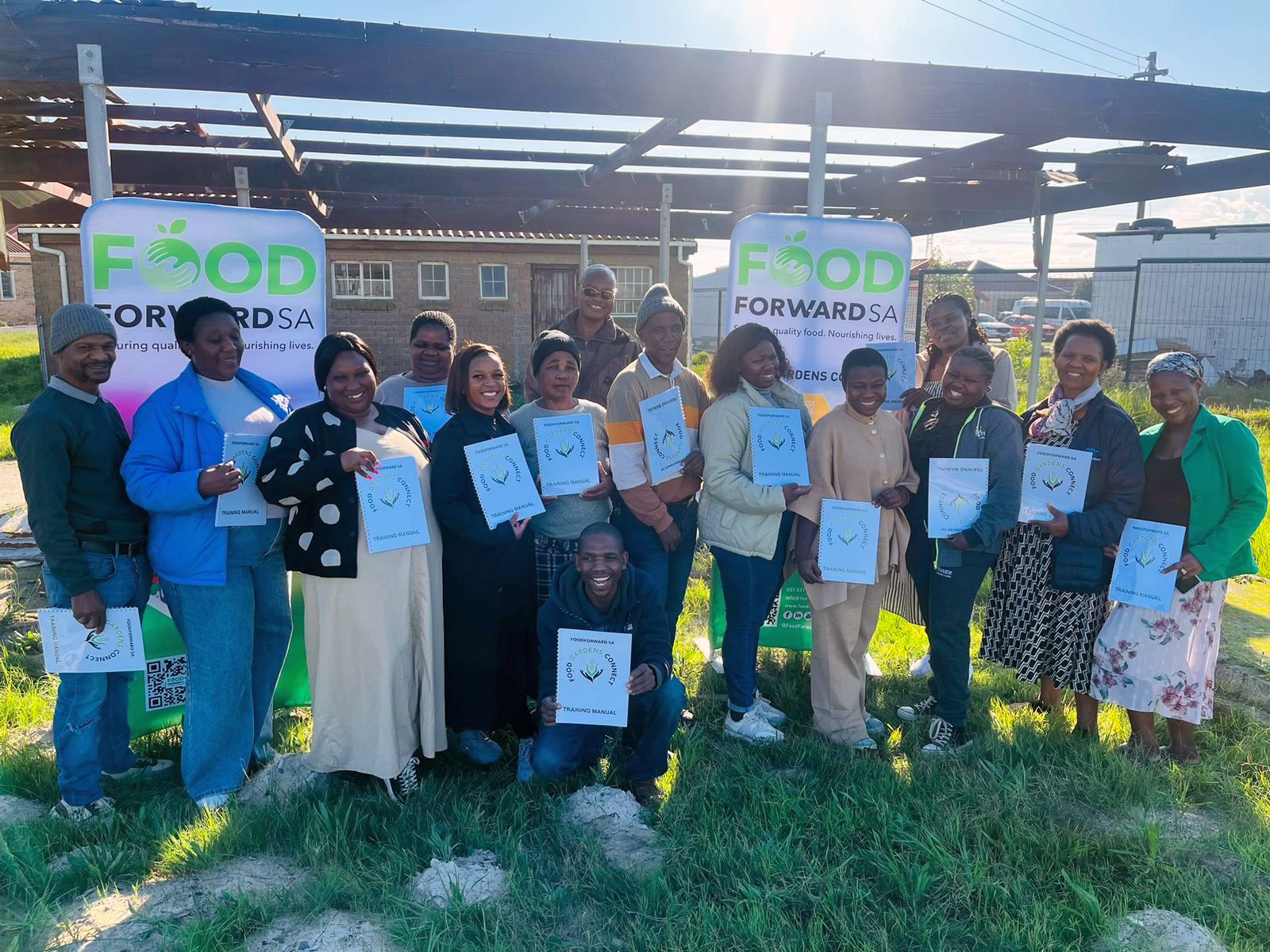
We are delighted to share that participants have completed their training and are already putting their new skills into practice, with many already applying what they have learned both within their organisations and at home.
One inspiring example comes from Yanga Jezile of Mfesane, who shared:
“I am now using the skills and knowledge I have gained through this programme to start my own garden at home in our backyard.”
The programme is already making a meaningful difference in participants’ lives. One graduate proudly said:
“I am going to hang this certificate on the wall in my room. This is the first certificate I have ever received in my life, and it means so much to me.”
Another participant reflected on how the training has transformed their approach to growing food:
“I used to work in the garden simply to get vegetables for my family, but now I understand how to care for plants properly and solve problems when they arise.”
Participating organisations are already reporting meaningful progress, including the establishment of new vegetable gardens, the adoption of composting and sustainable farming practices, and increased community interest in growing healthy, nutritious food. Participants have also highlighted the programme’s potential to improve food security while creating opportunities for income generation.
As Food Gardens Connect continues to expand across the Western Cape, we look forward to seeing even more communities empowered to grow food, create livelihoods, strengthen resilience, and improve access to fresh, nutritious food.