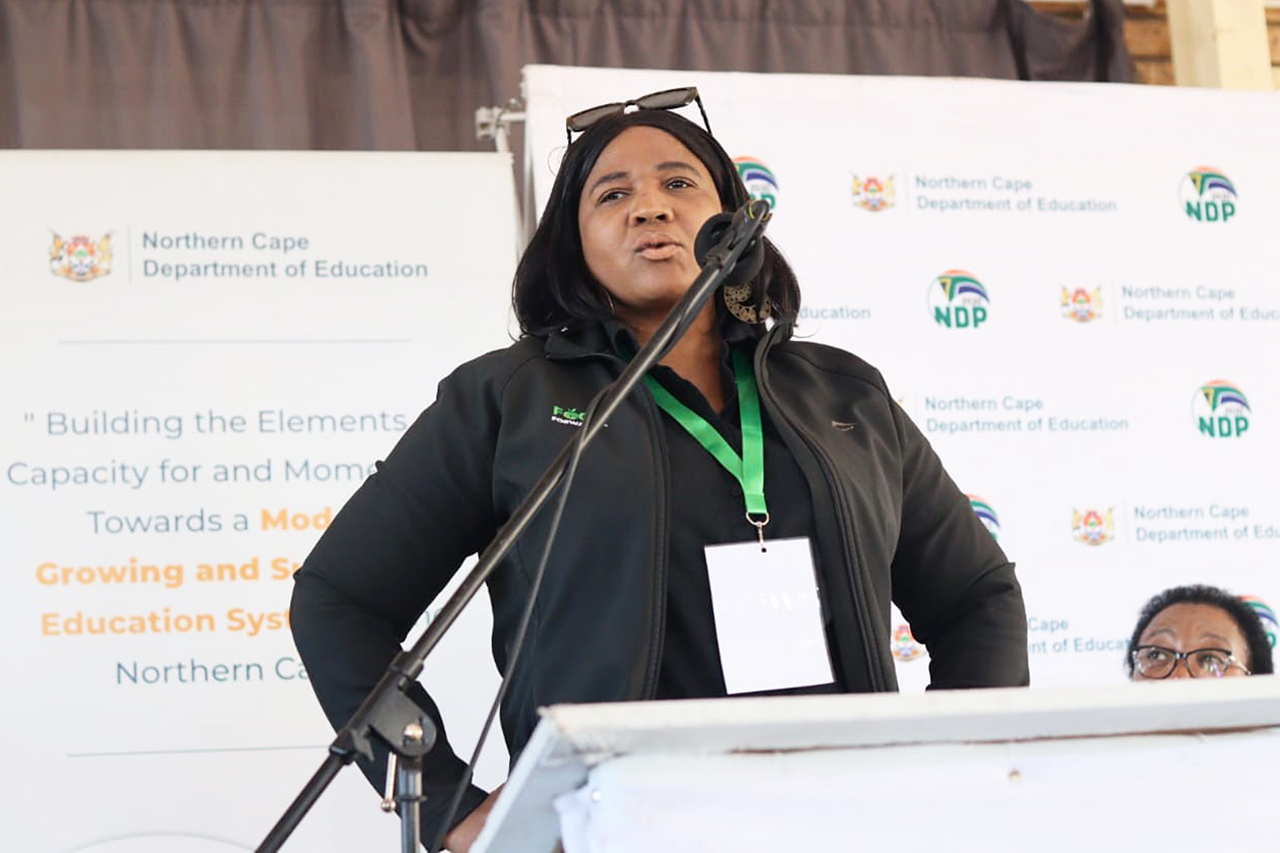
The halls of Green Point High School in Kimberley, in the Northern Cape were filled with excitement and hope as learners, educators, and partners gathered to mark the official launch of their School Breakfast Programme—an initiative designed to combat food insecurity and support academic achievement.
Green Point High School is one of 6 high schools situated in the poverty stricken Francis Baard district that have been selected for the school breakfast, sponsored by Capitec. These school do not qualify for the National Department of Basic Education’s National School Nutrition Programme (NSNP), as they are deemed “not poor enough,” which is one of the flaws of how schools in under-served communities were disproportionately selected when the classification was first introduced several years ago and never updated.
The school breakfast is served to 4,374 learners in the below schools:
- Reakantswe High School
- Greenpoint High School
- Homevale High School
- Valspan High School
- Pampierstad High School
- Banksdrift High School
This important milestone is the result of a powerful partnership between Capitec Bank, FoodForward SA, and the Northern Cape Department of Education. At its core, the programme aims to ensure that learners start their day with a nutritious meal, enabling them to focus better in class, improve their academic performance and attendance, and engage more meaningfully in the learning environment.
FoodForward SA bring a wealth of experience and infrastructure capacity to the initiative, having implemented national school breakfast programmes for more than 12 years for various corporate donors, demonstrating a tangible commitment to alleviating school hunger in the region.
Capitec Bank’s role in this partnership highlights its broader commitment to community upliftment and the transformative power of education. Through this collaboration, Capitec contributes to more than just financial inclusion; it invests directly in the well-being and potential of South Africa’s future leaders.
The Northern Cape Department of Education has played a vital role in bringing the project to life, ensuring that the programme aligns with educational goals and reaches the learners who need it most. Their efforts to promote and support the initiative can be seen through their active presence on social media, sharing images and videos that capture the spirit of the launch. View the department’s official post here.
Beyond addressing immediate nutritional needs in these schools, FoodForward SA also addresses broader sustainability objectives. By recovering good quality surplus food from across the food supply chain, the programme reduces food waste while delivering critical nutritional value to nearly 100 beneficiary organisations that reach more than 50,000 vulnerable people. The School Breakfast stands as a compelling example of how corporate, non-profit, and government partnerships can come together to create meaningful, lasting impact in communities. As the programme continues, it brings with it the promise of healthier learners, stronger schools, and a more resilient education system—laying the foundation for a brighter future for all.